CleaningQA
CleaningQA / Inspection library
Warehouse Cleaning Checklist
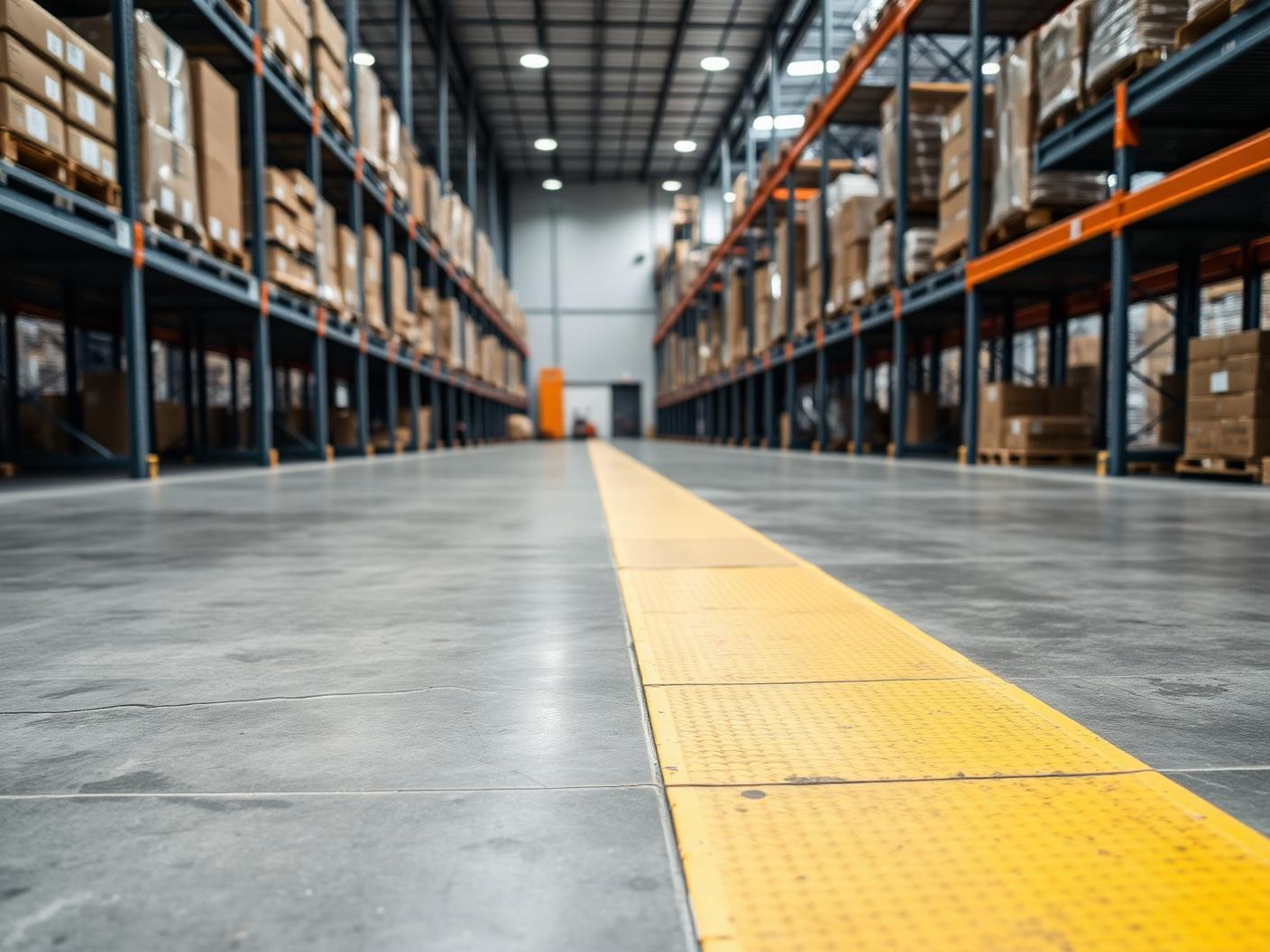
This is a quality inspection checklist for warehouses and distribution centres, written for cleaning contractors and site managers who need an honest view of cleaning standards in an operational environment.
Interactive checklist
Entrance and visitor areas
Entrance doors and glazing are free from obvious marks and fingerprints at normal viewing height.
dailyEntrance flooring and matting are free from debris, tracked-in dirt and standing water.
dailyReception, signing-in point and visitor seating are visibly clean and free from dust.
Where included within scopedailyWaste bins in visitor areas are emptied, relined and clean externally.
daily
Pedestrian walkways and circulation
Marked walkways are the most safety-relevant cleaning outcome on site.
Marked pedestrian walkways are clear of debris, packaging waste, strapping and shrink wrap.
dailyFloor markings and walkway lines are visible and not obscured by soiling or residue.
Where markings are worn rather than dirty, record it as a maintenance escalation.
weeklyNo uncleaned spills, oil marks or slip hazards are present on circulation routes.
dailyStairs, landings and handrails in circulation areas are clean and free from debris.
dailyWet-floor signage is in use where cleaning is in progress and removed once floors are dry.
daily
Main warehouse floor
Inspect from safe positions only. Do not enter operating MHE aisles to assess cleanliness.
Open floor areas are swept or machine-cleaned to the agreed standard with no visible debris accumulation.
dailyFloor surfaces show no dust film or tyre-mark build-up beyond the agreed standard in accessible areas.
weeklyFloor edges, column bases and rack ends are free from accumulated debris where access is safe.
Do not reach into racking or move stored goods to inspect.
weeklyAreas that could not be inspected safely — live MHE aisles, restricted or automated zones — are recorded as not applicable and reported.
dailyScrubber-drier passes leave an even finish with no missed lanes or standing water.
Where included within scopedaily
Picking and packing zones
Packing benches and work surfaces are clear and free from dust, tape residue and packaging debris.
dailyFloors around pick faces and pack stations are free from cardboard offcuts, strapping and film.
dailyWaste and recycling points at pack stations are emptied before overflow and correctly segregated.
dailyShared touch points such as scanners, terminals and printers are visibly clean.
Where included within scopedaily
Loading and goods-in areas
Dock and loading floors are free from loose debris, pallet fragments and packaging waste.
dailyDock door thresholds and leveller edges are clear of debris where they can be inspected safely.
Only when the dock position is out of service or safely isolated.
weeklyNo unreported spillage or damaged-stock residue remains in the goods-in area.
dailyThe immediate external apron is free from wind-blown litter and stray packaging.
Where included within scopedaily
Site offices
Office floors are clean, with no tracked-in warehouse dust or debris.
dailyDesks, shared surfaces and cabinet tops within reach are free from visible dust.
Where included within scopeweeklyOffice bins are emptied and relined, with no waste left beside them.
dailyInternal glazing and viewing panels are free from obvious marks and handprints.
weekly
Welfare and break areas
The area shift teams judge the contract on, and the most common source of complaints.
Tables and seating are clean, dry and free from crumbs, spills and sticky marks.
dailyWorktops, sink and taps are visibly clean with no food residue or standing debris.
dailyMicrowave, fridge and vending machine exteriors are clean and free from splashes.
Where included within scopedailyBreak area floor is clean and dry, including under and behind free-standing furniture where accessible.
dailyFood waste is removed each service, bins are relined and lids are clean.
dailyLocker fronts and tops in welfare areas are free from dust and marks.
Where included within scopeweekly
Washrooms / restrooms
Toilets and urinals are visibly clean inside and out, including the base and pipework.
dailyBasins, taps and surrounds are clean, with no residue or standing water.
dailyFloors are clean and dry, including behind pans and along edges.
dailySoap, paper and sanitary consumables are replenished where included within scope, in every cubicle.
Where included within scopedailyWaste and sanitary bins are emptied, relined and visibly clean.
dailyNo unresolved odour issue is present; any persistent problem is escalated rather than masked.
daily
Waste areas and cleaning store
The waste compound is tidy, with waste inside containers and no overspill on the ground.
Where included within scopedailyWaste streams are segregated as agreed, with cardboard and film in their designated points.
dailyCleaning store and equipment are clean, organised, correctly stored and in serviceable condition.
weeklyIssues raised at the previous inspection have been resolved and have not recurred.
weekly
Run this as a digital inspection
Turn this checklist into recurring site inspections, corrective actions, photographic evidence, supervisor verification and professional client reports. Your edits come with you.
Warehouse cleaning is judged differently: walkway visibility, floor condition, dust on accessible surfaces and the state of welfare facilities matter far more than presentation detail. Every item is written so it can be assessed from a safe position, and anything requiring access to racking, heights, machinery or restricted zones should be recorded as not applicable and escalated.
What this checklist covers
- Entrance and visitor areas
- Doors and glazing, matting, signing-in point and waste.
- Pedestrian walkways
- Obstruction, marking visibility, spills, stairs and wet-floor signage.
- Main warehouse floor
- Open floor, dust and tyre marks, safe-access edges and machine-cleaning finish.
- Picking and packing zones
- Benches, floor debris, waste segregation and shared touch points.
- Loading and goods-in
- Dock floors, thresholds, spillage and the immediate external apron.
- Site offices
- Floors, surfaces, bins and internal glazing.
- Welfare and break areas
- Tables, worktops, appliance exteriors, floors, food waste and lockers.
- Washrooms / restrooms
- Pans, basins, floors, consumables, waste and odour.
- Waste areas and cleaning store
- Compound tidiness, segregation, equipment condition and recurring issues.
Suggested frequencies
These are starting points, not a universal standard. The right frequency depends on the scope of work, footfall, site usage, client requirements and facility risk.
- Daily: Walkways, welfare, washrooms, waste and anything affecting safe movement around site.
- Weekly: Floor edges and column bases, dust film, office surfaces and cleaning store condition.
- Periodic: Scheduled deep floor treatment and any access-controlled work planned with the site.
How to use this checklist
- Agree with the site which zones the inspector may enter, and when — many areas can only be assessed during a shift changeover.
- Record anything that cannot be reached safely as not applicable, with a note, rather than guessing.
- Never move stored goods, climb racking or enter live MHE aisles to complete an inspection point.
- Photograph failures from a safe position, and include enough context to identify the location.
- Separate cleaning failures from maintenance issues such as worn floor markings or damaged flooring, and escalate them differently.
- Raise corrective actions with an owner and a deadline, and verify the fix with evidence before closing.
Cleaning checklist vs quality inspection
A task checklist asks: was the task done? A quality inspection asks: does the result meet the agreed standard? The difference matters, because a client never sees your task list — they see the edge of a corridor, a washroom mirror and a meeting room table. Writing each item as an observable outcome is what makes a pass or fail defensible in a contract review.
Common quality failures
- Packaging waste accumulating at the edges of walkways rather than in them.
- Dust film on floors treated as unavoidable rather than measured against the agreed standard.
- Welfare areas cleaned before the main shift break rather than after it.
- Scrubber-drier lanes leaving untouched strips visible under angled light.
- Dock thresholds skipped every visit because a trailer was always in position.
- Waste compound overspill counted as the site's problem rather than being reported.
- Inspections silently skipping restricted zones instead of recording them as not applicable.
Customise this for your contract
Commercial cleaning scopes vary between contracts and facilities. Adapt this template to reflect the agreed scope of work, required frequencies, site risks and client-specific standards.
Items marked where included within scope are the ones most likely to differ between contracts — remove or reword them in the editor above.
Inspect → Correct → Verify
CleaningQA takes this checklist further: run it on a phone at the site, record failed items with photographs, raise corrective actions with an owner and a deadline, collect completion evidence, verify the fix as a supervisor, and send the client a professional quality report.
More on the product: CleaningQA cleaning inspection software
Related templates
Frequently asked questions
- Is this warehouse cleaning checklist free to use?
- Yes. Edit it, print it and use it on site without creating an account. Your changes stay in your own browser.
- How do I handle areas that are unsafe to inspect?
- Mark the item as not applicable, record why, and report it. A completed inspection that quietly skips a zone is worse than one that shows a gap.
- Should cleaning cover racking and high-level areas?
- Only where it is explicitly in scope and planned with the correct access equipment and permits. It is not part of a routine walk-round inspection.
- How often should a warehouse be inspected?
- It depends on operating hours, throughput, contract scope and site risk. Many contracts use a formal monthly inspection with more frequent welfare and washroom checks.