A good inspection does more than confirm that cleaning tasks were completed. It gives a supervisor a consistent way to judge the result, record failures, assign corrective work and verify that the required standard was restored.
The basic process is:
Review the scope → define observable standards → inspect → record Pass, Fail or N/A → score → correct failures → verify the work → report the outcome.
- 01SCOPEReview contract
- 02STANDARDSDefine observable outcomes
- 03INSPECTPass / Fail / N/A
- 04SCOREMeasure the result
- 05CORRECTAssign failures
- 06VERIFYConfirm the standard is restored
- 07REPORTShow the outcome
This guide explains how to build that process from start to finish.
Scope note: This guide covers quality control for contracted commercial cleaning. It is not a substitute for food-safety, infection-control, occupational-safety or other regulatory inspections that may apply to a particular facility.
Contents
- What an inspection checks
- 1. Contract and scope
- 2. Observable standards
- 3. Specific to the facility
- 4. Pass, Fail and N/A
- 5. Inspect consistently
- 6. Record failures factually
- 7. Score transparently
- 8. Corrective actions
- 9. Completion evidence
- 10. Verify before closing
- 11. Client report
- 12. Recurring failures
- Worked example
- How often?
- Who should inspect?
- Process checklist
- Run inspections digitally
What does a commercial cleaning inspection actually check?
A cleaning task tells somebody what work they are expected to perform.
An inspection checks whether the finished result meets the agreed standard.
That distinction matters.
A task list might say:
Clean entrance glass.
A quality inspection should ask something observable, such as:
Entrance glazing is free from obvious fingerprints, smears and marks at normal viewing height.
The first tells the cleaner what to do.
The second gives the inspector a condition they can reasonably pass or fail.
Clean entrance glass
Inspection standardEntrance glazing is free from obvious fingerprints, smears and marks at normal viewing height.
Vacuum reception
Inspection standardAccessible flooring is free from visible debris, tracked-in dirt and obvious missed edges.
Clean washroom mirrors
Inspection standardMirrors are free from visible streaks, splash marks and fingerprints.
Empty bins
Inspection standardBins are empty, correctly relined and visibly clean externally.
Commercial cleaning inspections become more consistent when the criteria describe observable results rather than vague expectations such as “clean thoroughly” or “leave presentable.”
1. Start with the cleaning contract and scope
Before building an inspection, establish what the cleaning team is actually responsible for.
The cleaning specification or contract should identify the areas included, the work required, expected frequencies and important exclusions.
An inspection should measure that agreed service.
For example, a gym contract might include changing rooms and flooring while the gym’s own employees wipe exercise equipment throughout the day.
An office contract might include internal entrance glass but exclude external windows.
A warehouse cleaner might service offices and welfare facilities while having no permission to enter an active loading area during operations.
Those boundaries matter.
If something is outside the cleaning contractor’s scope, repeatedly failing the cleaning team for it creates a misleading quality record rather than improving the service.
Before the first inspection, confirm:
- which areas are included;
- what work is excluded;
- periodic work that should not be judged as part of the daily clean;
- client-specific presentation requirements;
- responsibilities shared with the client or another contractor;
- areas that cannot always be safely or reasonably accessed.
The objective is to inspect the service that was actually agreed.
2. Turn cleaning tasks into observable inspection standards
One of the most useful improvements you can make to an inspection is to rewrite vague cleaning tasks as observable outcomes.
Compare these examples:
| Cleaning task | Observable inspection standard |
|---|---|
| Vacuum reception | Accessible flooring is free from visible debris, tracked-in dirt and obvious missed edges. |
| Clean washroom mirrors | Mirrors are free from visible streaks, splash marks and fingerprints. |
| Empty bins | Bins are empty, correctly relined and visibly clean externally. |
| Clean meeting room | Tables, accessible surfaces and flooring meet the agreed presentation standard. |
| Clean restroom basins | Basins, taps and surrounding surfaces are visibly clean with no obvious residue or standing water. |
The aim is not to remove every element of judgement from an inspection. Cleaning quality is partly visual.
The aim is to reduce unnecessary subjectivity.
A supervisor, cleaner and client should be able to understand why an item failed without having to interpret what somebody meant by “not clean enough.”
Where the contract itself uses vague wording, the inspection template can provide the more observable standard used for routine quality control.
3. Make the inspection specific to the facility
A generic inspection can cover common areas such as flooring, waste, restrooms or washrooms and internal glass, but different facilities need different inspection criteria. A broad commercial cleaning checklist is a good starting point before narrowing to the facility.
An office cleaning inspection checklist might emphasise:
- entrance presentation;
- reception;
- office areas;
- meeting rooms;
- kitchens;
- internal glazing;
- washrooms.
A gym cleaning checklist needs to account for areas such as:
- exercise-floor presentation;
- mirrors;
- changing rooms;
- showers;
- rubber flooring;
- debris around accessible equipment.
A warehouse cleaning checklist may need to consider:
- pedestrian walkways;
- offices and welfare facilities;
- loading-area boundaries;
- pick or packing areas;
- operational areas that cannot safely be inspected at certain times.
This is why one enormous master checklist is rarely the best answer.
Start with criteria relevant to the facility, then customise them to the actual contract.
Remove items that are outside scope. Add site-specific areas. Reword criteria where the client has agreed a different standard.
The inspection should resemble the building and cleaning specification being inspected.
4. Define Pass, Fail and N/A
Keep the basic inspection decision simple.
Pass
The observable condition meets the agreed standard.
Fail
The observable condition does not meet the agreed standard.
A failed item should normally contain enough information for somebody else to understand what needs correcting.
N/A
The item does not apply to this site, falls outside the current cleaning scope or cannot reasonably be assessed during this inspection.
N/A should not be used to hide a failure.
If external glazing is outside the cleaning contract, it may be N/A.
If a meeting room is temporarily inaccessible because it is occupied by the client, N/A may also be reasonable, ideally with a note explaining why it was not inspected.
If the washroom mirror is visibly streaked, it is not N/A simply because raising the issue is inconvenient.
Clear use of N/A also matters for scoring. An item that was genuinely not applicable should normally be removed from the score rather than counted as either a pass or a fail.
Site
Example commercial office
Area
Ground-floor washroom
Criterion
Basins and surrounds are free from visible marks after service.
Inspector note
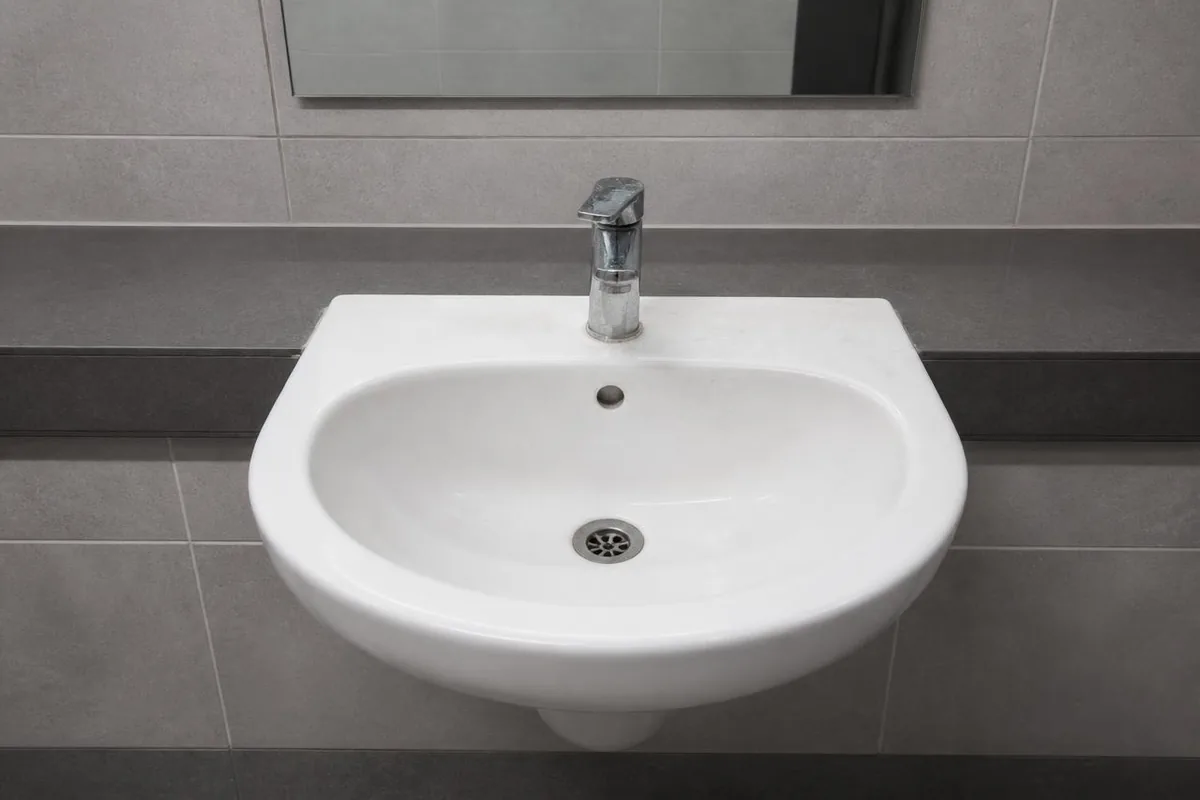
Visible water marks and residue remain around the right-hand basin and tap.
5. Inspect the site consistently
Consistency makes inspection results more useful over time.
Where practical, supervisors should follow a similar route through the site during each formal inspection.
An office route might be:
Entrance → reception → office areas → meeting rooms → kitchen → washrooms → circulation areas → periodic checks.
A repeatable route reduces the chance of areas being missed and makes separate inspections easier to compare.
Operating conditions matter too.
A gym inspected immediately before opening is not directly comparable with the same gym during the evening rush.
A reception inspected before employees arrive may look different at 3 p.m.
You do not need to inspect every site at exactly the same minute, but major differences in timing, access or site conditions should be recognised when interpreting the result.
Inspectors should also look beyond the most obvious surfaces.
Recurring quality failures frequently appear around:
- floor edges and corners;
- behind doors;
- bin bases;
- underneath accessible furniture;
- push plates and handles;
- partition glass;
- cubicles that receive less attention;
- edges around fixtures.
The purpose is not to catch the cleaning team out.
It is to create an honest record of the standard being delivered.
6. Record failures factually
A useful inspection record describes what the inspector can actually observe.
Weak note:
Washroom bad.
Better note:
Visible water marks and residue remain around the right-hand basin and tap.
The second description tells the person responsible exactly where the problem is and what needs attention.
Photographic evidence can be particularly useful when a problem is difficult to describe, potentially disputed or likely to recur.
Examples include:
- streaking on glass;
- debris accumulated along an edge;
- residue around a basin;
- marks on flooring;
- dust beneath accessible equipment.
A photograph should provide enough context to identify the issue while avoiding unnecessary capture of people, personal information or sensitive areas.
Not every failed item needs a photograph.
Evidence should make the record clearer, not become an administrative exercise performed regardless of whether it adds value.
7. Score the inspection transparently
A quality score makes performance easier to compare between sites and inspection periods, but only when people understand how it is calculated.
The simplest model is:
Passed applicable items ÷ total applicable answered items × 100
If 47 applicable items were inspected and 44 passed:
44 ÷ 47 × 100 = 93.6%
Items marked N/A are excluded.
This model is easy to understand, but it treats every inspection item as equally important.
That can create misleading results.
Imagine that 20 low-priority presentation checks pass while an important washroom standard fails. The resulting percentage may still look excellent even though the issue could matter significantly to the client.
One way to address that is weighted scoring.
For example:
| Inspection item | Result | Weight |
|---|---|---|
| Entrance glazing | Pass | 1 |
| Reception flooring | Pass | 2 |
| Reception surfaces | Pass | 1 |
| Washroom fixtures | Fail | 3 |
| Washroom consumables | Pass | 2 |
Under a weighted model, the basic calculation becomes:
Weight of passed applicable items ÷ total weight of applicable answered items × 100
Higher-priority criteria therefore have more influence on the final result.
Whatever scoring model you use, keep it stable and understandable.
Do not change the calculation between inspections simply to produce a better percentage.
And do not let the overall score hide an important individual failure. Critical or high-priority problems should remain visible separately from the number.
A cleaning-quality score is a management measure of the agreed cleaning standard. It is not, by itself, a hygiene, safety or regulatory certification.
| Criterion | Result | Weight |
|---|---|---|
| Entrance glazing | Pass | 1 |
| Reception flooring | Pass | 2 |
| Reception surfaces | Pass | 1 |
| Washroom fixturesHigh priority | Fail | 3 |
| Washroom consumables | Pass | 2 |
Weighted score
66.7%
Unweighted equivalent
80%
Whatever the number says: the washroom fixtures failure is still open. A high overall score should never make an important failure disappear, and no percentage is universally “good” — the meaning depends on the contract and the agreed target.
8. Turn meaningful failures into corrective actions
An inspection creates value when something happens after a failure is found.
Recording:
Mirror — Fail
does not establish who will correct it, when it should be corrected or whether the work was ever checked again.
A useful corrective action identifies:
What failed
Visible streaking remains across the washroom mirror.
Where
Ground-floor washroom.
Who owns the correction
The relevant cleaner or responsible team.
When it should be corrected
An appropriate deadline based on the issue and contract.
Supporting context
A factual note and, where useful, inspection evidence.
This creates a record of responsibility rather than relying on an informal conversation that may be forgotten before the next shift.
Not every observation needs a major escalation.
A minor presentation issue may need a quick correction.
A serious or repeatedly failing standard may need supervisor or operations-manager involvement.
The important principle is simple:
A quality failure should have a defined route towards resolution.
- 01FAILEDVisible marks around right-hand basin
- 02ASSIGNEDCleaner responsible for area
- 03EVIDENCE SUBMITTEDCorrection completed
- 04SUPERVISOR REVIEWResult compared with the original criterion
Verified
Standard restored. The action closes with its history retained.
Returned for correction
The submitted result still does not meet the standard, so the action stays open.
9. Record completion evidence
Once the cleaner has corrected the issue, record that the corrective work has been completed.
A completion note might say:
Mirror recleaned and checked under overhead lighting.
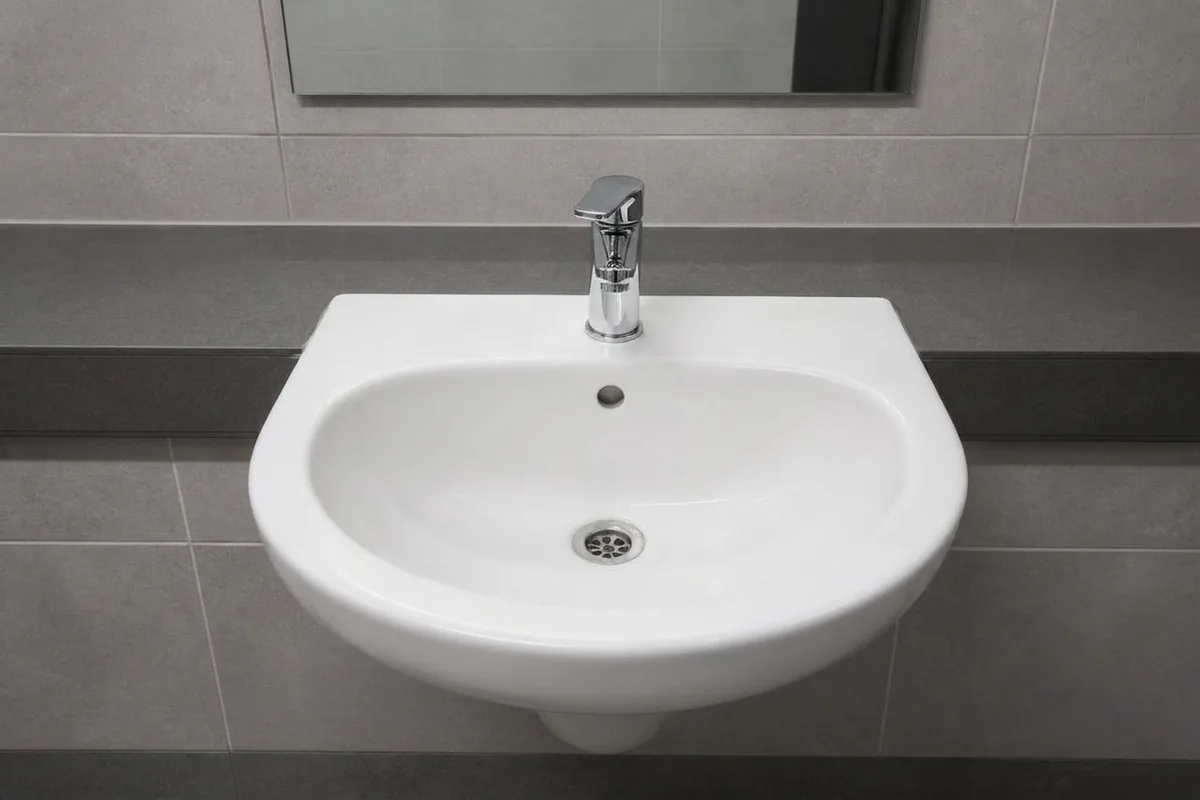
For a visible defect, an after photograph may also be useful.
But completion evidence and verification are not the same thing.
The person responsible for correcting the problem is effectively confirming:
I have completed the corrective work.
The supervisor still needs to decide:
Does the result now meet the agreed inspection standard?
That separation matters.
Without it, an issue can effectively close itself as soon as the person responsible for the correction says it is done.
10. Verify the correction before closing it
Verification closes the quality-control loop.
The supervisor should compare the completed work with the original failed standard and decide whether the required result has genuinely been restored.
There are two sensible outcomes.
Verified
The corrective work now meets the agreed standard.
Returned for correction
The submitted result still does not meet the standard.
If it is returned, explain what remains wrong.
For example:
Lower-right corner of the mirror still shows visible streaking. Please reclean and resubmit.
The cleaner can then correct the remaining issue and provide revised evidence.
This creates a much stronger record:
Failed → assigned → corrected → reviewed → verified
rather than:
Failed → cleaner says done → closed.
For a commercial cleaning quality control process, that distinction is significant. The purpose of corrective action is not merely to show that somebody responded. It is to confirm that the required quality standard was restored.
That loop — failed, corrected, verified — is the part cleaning quality control software exists to hold together.
11. Give the client a report they can understand
The client usually does not need every internal operational note.
They need a clear view of the cleaning quality being delivered at their site.
A useful commercial cleaning inspection report may include:
- client and site;
- inspection date;
- inspector;
- overall quality score;
- agreed target where one is used;
- performance by area;
- issues identified;
- corrective actions completed;
- before-and-after evidence where appropriate;
- outstanding issues;
- verification status.
One distinction should be particularly clear:
An issue was found does not necessarily mean an issue remains unresolved.
Finding a quality problem before the client reports it can demonstrate that the control process is doing its job — provided the problem is then corrected and verified properly.
The strongest client report therefore tells the complete story rather than showing only an inspection percentage.
CleaningQA quality report
Commercial Office — Quality Inspection
Score
94%
- Issues identified
- 2
- Corrective actions completed
- 2
- Verified
- 2
- Outstanding
- 0
| Area | Score | Outcome |
|---|---|---|
| Entrance and reception | 100% | No issues found |
| Office areas | 97% | No issues found |
| Kitchen | 92% | 1 issue — corrected and verified |
| Washrooms | 88% | 1 issue — corrected and verified |
The report shows both what was found and what happened afterwards. Fictional demonstration data — not a real customer report.
12. Review recurring failures
Individual inspections show what happened during one visit.
A stronger quality-control process also looks across inspections.
Suppose the same washroom fails for basin residue during three separate inspections.
Repeatedly sending the cleaner back may resolve the immediate problem, but the recurrence suggests a deeper question.
For example:
- Is the task regularly being missed?
- Is the cleaning frequency sufficient for the current level of use?
- Is access preventing the work?
- Has site usage changed?
- Does the cleaner need clearer instruction or supervision?
- Is the agreed cleaning scope sufficient?
- Is a maintenance issue being mistaken for a cleaning issue?
Repeated quality failures should trigger investigation, not just repeated corrective actions.
This is where a structured inspection history becomes more valuable than a collection of disconnected forms.
Worked example: from failed inspection to verified correction
The following example uses CleaningQA’s fictional Hawthorne Business Centre demonstration site. It illustrates the workflow rather than representing a real customer incident.
A supervisor is inspecting the ground-floor washroom.
The inspection criterion is:
Basins and surrounds are free from visible marks after service.
The supervisor observes water marks around one basin.
1. Inspect
Result: Fail
Note: Visible water marks remain around the right-hand basin after service.
A photograph records the condition.
2. Correct
The failed item becomes a corrective action.
It is assigned to the cleaner responsible for the area with a clear due time.
The cleaner receives the issue details and can see exactly what failed.
3. Submit completion evidence
The cleaner recleans the basin and submits an after photograph with a brief completion note.
The issue has now been corrected, but it has not yet been verified.
4. Verify
The supervisor reviews the submitted evidence against the original inspection criterion.
If the basin now meets the standard, the action is verified.
If visible marks remain, the supervisor returns it for further correction instead.
5. Report
The client-facing inspection record can now show:
- 1 issue identified
- 1 corrective action completed
- 1 issue verified
- 0 outstanding
That tells a much more useful quality story than an inspection score alone.
It shows that the system identified a problem and followed it all the way through to resolution.
How often should commercial cleaning inspections be carried out?
There is no single inspection frequency that is right for every commercial cleaning contract.
Frequency should reflect factors such as:
- client requirements;
- size and complexity of the site;
- footfall and operating hours;
- previous quality performance;
- contract risk;
- mobilisation of a new site;
- recurring complaints or failures;
- supervisor availability.
A stable, well-performing account may need a different inspection rhythm from a newly mobilised contract with recurring problems.
High-use areas can also justify more frequent checks than the formal whole-site inspection.
The important thing is to use an inspection schedule deliberately rather than adopting an arbitrary frequency across every contract.
Who should carry out a cleaning quality inspection?
Commercial cleaning inspections are commonly carried out by supervisors, area managers, operations managers or quality managers.
Where practical, there is value in having somebody other than the person who performed the cleaning make the final quality judgement.
For smaller cleaning companies, that separation may not always be possible on every visit.
The key requirement is that the inspector understands:
- the contract scope;
- the agreed inspection standards;
- how Pass, Fail and N/A should be used;
- how scoring works;
- what should become a corrective action;
- what evidence is appropriate;
- when a correction can genuinely be verified.
Consistency between inspectors matters as the cleaning portfolio grows.
What should a commercial cleaning inspection process include?
Before rolling inspections across multiple client sites, check that you can answer yes to these questions:
- Is every inspection based on the actual cleaning contract and scope?
- Are inspection criteria written as observable outcomes?
- Are facility-specific templates used rather than one generic form?
- Can inspectors use Pass, Fail and N/A consistently?
- Is N/A excluded appropriately from scoring?
- Is the scoring method transparent?
- Can important failures remain visible even when the overall score is high?
- Does every meaningful failure have an owner and due time?
- Can evidence be attached where it helps explain the issue?
- Is cleaner completion separate from supervisor verification?
- Can an inadequate correction be returned?
- Can the client see what was found and what was resolved?
- Can recurring quality problems be identified across inspections?
If those elements are in place, the inspection is doing more than documenting a walkthrough.
It is becoming part of a repeatable commercial cleaning quality-control system.
Run commercial cleaning inspections digitally
Paper inspection forms and spreadsheets can record passes and failures. The process becomes harder to manage when inspection results, photographs, corrective actions, completion evidence and client reports live in different places.
Cleaning inspection software can keep that history together.
CleaningQA is built around a simple workflow:
Inspect → Correct → Verify.
Supervisors run inspections on a phone, record quality failures, assign corrective actions, collect completion evidence, verify the correction and produce client-readable quality reports.
Cleaning companies can start with facility-specific templates such as an office cleaning inspection checklist, gym cleaning checklist or warehouse cleaning checklist, then customise the criteria for each contract.
The important part is not whether an inspection begins on paper or on a screen.
It is whether every meaningful failure has a clear route from found to fixed to verified.
For the wider management system this inspection sits inside, see Commercial Cleaning Quality Control.
Written and maintained by the CleaningQA team. All sites, scores, photographs and findings shown in the examples above are fictional demonstration data.