CleaningQA
CleaningQA / Inspection library
Retail Store Cleaning Checklist
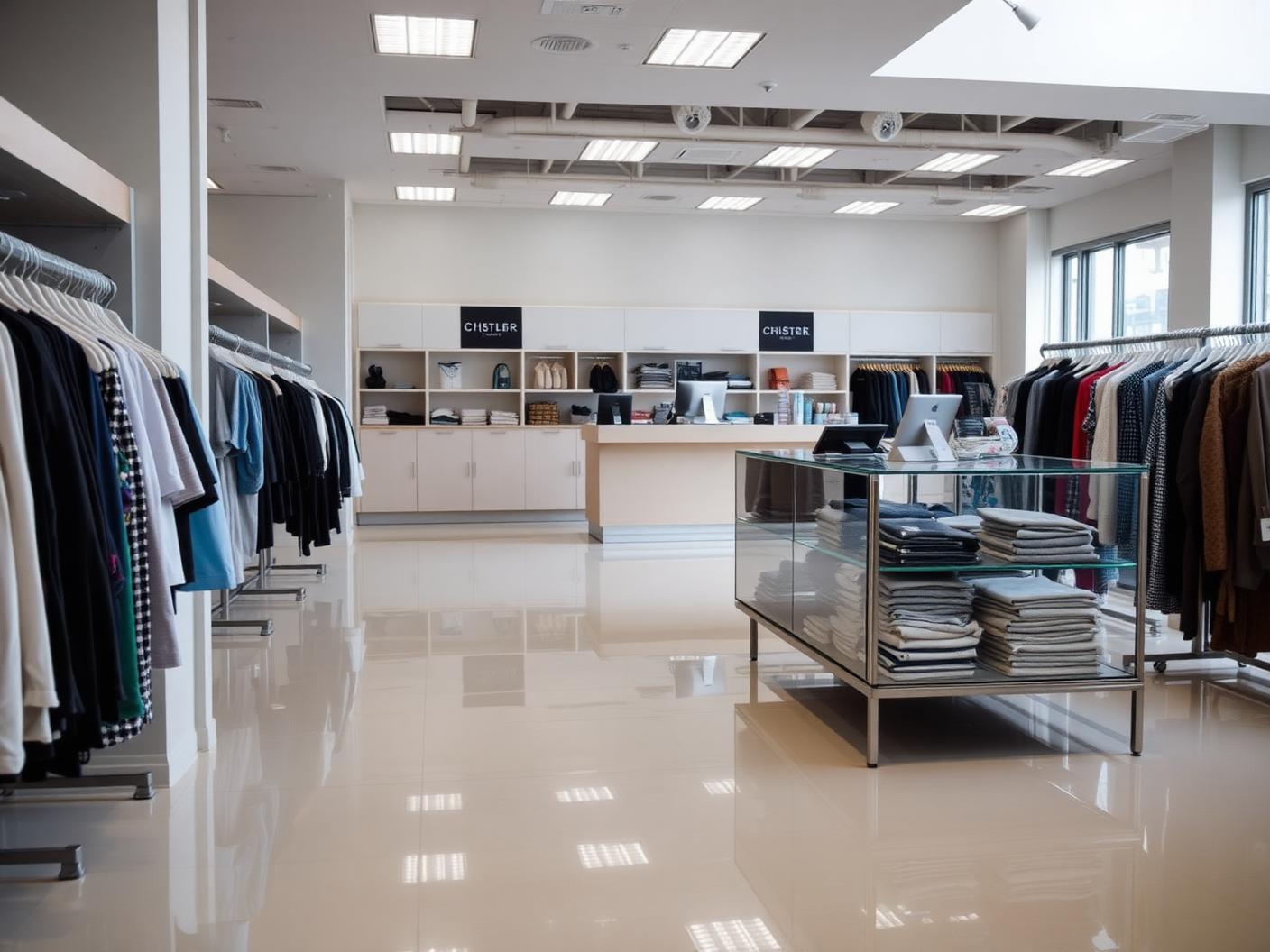
This is a quality inspection checklist for retail stores, written for cleaning contractors, store managers and area managers who need to judge how the store presents to a customer walking the floor during trading hours.
Interactive checklist
Shopfront and entrance
Shopfront glazing and entrance doors are free from fingerprints, smears and splash marks at customer height.
dailyDoor frames, handles, push plates and thresholds are clean and free from build-up.
dailyEntrance matting is clean, lying flat and free from grit, with no debris trapped at its edges.
dailyThe immediate external frontage is free from litter, cigarette debris and staining where included within scope.
Where included within scopedailyWindow display bases and plinths are free from visible dust and debris.
Where included within scopeweekly
Sales floor
Inspect in trading light, walking the customer route rather than the staff route.
Sales floor is clean throughout, with an even appearance and no dulling or residue build-up in main traffic lanes.
dailyFloor edges, corners and areas under fixture bases are free from dust, hangers, tags and debris.
weeklyNo uncleaned spills, marks or slip hazards are present on the shop floor.
dailyWet-floor signage is in use during cleaning and removed once floors are dry.
dailySales floor mirrors are free from streaks, handprints and splash marks over their full height.
daily
Fixtures and displays
Shelf edges, front faces and fixture tops within reach are free from visible dust.
weeklyDisplay cabinets and glass counters are free from fingerprints and smears inside the customer's view.
Where included within scopedailyHanging rails, gondola ends and stands are clean and free from dust build-up.
weeklyFloor beneath low fixtures and gondolas is free from debris where access is safe and stock is not moved.
Do not move stock or dismantle displays to inspect; report inaccessible areas instead.
weeklyCustomer-facing screens and digital displays are clean and free from smears.
Where included within scopedaily
Fitting rooms
Small, enclosed and heavily used — the most visible failure point in fashion retail.
Fitting room floors are clean, free from hair, tags, pins and debris, including in corners.
dailyFitting room mirrors are free from streaks, handprints and marks over their full height.
dailySeating, hooks and rails are clean and free from marks and residue.
dailyCubicle walls, curtains or doors are clean and free from marks; damaged or soiled curtains are reported.
weeklyNo stale odour is noticeable on entering a cubicle.
daily
Checkout and service areas
Till counters and bagging areas are clean, dry and free from debris, tags and receipts.
dailyCard terminals, self-checkout screens and touch points are visibly clean.
Where included within scopedailyFloor in the queue area and behind the till is clean and free from debris.
dailyCustomer-facing bins are emptied before overflow, relined and clean externally.
daily
Customer washrooms
Toilets are visibly clean inside and out, including the base and pipework.
Where included within scopedailyBasins, taps and vanity surfaces are clean, with no residue or standing water.
dailyFloors are clean and dry, including edges and behind the pan.
dailyMirrors are free from streaking and splash marks.
dailySoap, paper and sanitary consumables are replenished where included within scope, in every cubicle.
Where included within scopedailyWaste and sanitary bins are emptied, relined and visibly clean.
daily
Stockroom and back of house
Stockroom walkways and fire exit routes are clear of packaging, hangers and debris.
dailyAccessible stockroom floor areas are swept and free from cardboard offcuts and film.
dailyStaff room tables, seating and worktops are clean, dry and free from food residue.
dailyMicrowave, fridge and kettle exteriors in the staff area are clean and free from splashes.
Where included within scopedailyStaff lockers, hooks and changing areas are free from dust, marks and abandoned litter.
weekly
Waste, store and recurring checks
Cardboard, film and general waste are segregated as agreed and held in their designated points.
dailyThe waste hold or compound is tidy, with waste contained and the surrounding floor clear.
Where included within scopedailyCleaning store and equipment are clean, organised, correctly stored and in serviceable condition.
weeklyAccessible high-level surfaces, vents and light fittings are free from visible dust where they can be reached safely.
Where included within scopeperiodicIssues raised at the previous inspection have been resolved and have not recurred.
weekly
Run this as a digital inspection
Turn this checklist into recurring site inspections, corrective actions, photographic evidence, supervisor verification and professional client reports. Your edits come with you.
Retail is judged at two heights: eye level, where glazing, fixtures and displays show every mark, and floor level, where traffic lanes, edges and fitting rooms show every missed pass. Every item below describes an observable outcome so it can be recorded as a pass, a fail or not applicable.
What this checklist covers
- Shopfront and entrance
- Glazing, frames and handles, matting, frontage and display plinths.
- Sales floor
- Traffic lanes, edges and fixture bases, spills, signage and mirrors.
- Fixtures and displays
- Shelf edges, glass counters, rails, floors beneath fixtures and screens.
- Fitting rooms
- Floors, mirrors, seating and hooks, cubicle walls and odour.
- Checkout and service
- Counters, terminals and screens, queue floor and customer bins.
- Customer washrooms
- Pans, basins, floors, mirrors, consumables and waste.
- Stockroom and back of house
- Walkways and fire routes, floors, staff room and lockers.
- Waste and cleaning store
- Segregation, waste hold, equipment condition and recurring issues.
Suggested frequencies
These are starting points, not a universal standard. The right frequency depends on the scope of work, footfall, site usage, client requirements and facility risk.
- Daily: Glazing, sales floor, fitting rooms, tills, washrooms, waste and anything customer-facing.
- Weekly: Shelf edges and fixture tops, floors beneath fixtures, cubicle walls and staff areas.
- Periodic: High-level dusting and scheduled floor restoration, planned outside trading hours.
How to use this checklist
- Walk the customer route first and inspect in trading light — back-of-house lighting hides floor and glazing failures.
- Remove or mark as not applicable anything outside the agreed scope, such as display dressing or stock handling.
- Never move stock or dismantle displays to reach an inspection point; report inaccessible areas instead.
- Inspect fitting rooms at peak and off-peak; standards diverge sharply through the trading day.
- Photograph failures with enough context to identify the fixture or cubicle.
- Raise corrective actions with an owner and a deadline, and verify with evidence before closing.
Cleaning checklist vs quality inspection
A task checklist asks: was the task done? A quality inspection asks: does the result meet the agreed standard? The difference matters, because a client never sees your task list — they see the edge of a corridor, a washroom mirror and a meeting room table. Writing each item as an observable outcome is what makes a pass or fail defensible in a contract review.
Common quality failures
- Shopfront glazing cleaned only to arm height, leaving an obvious line in daylight.
- Entrance matting cleaned on top while grit accumulates underneath and at the edges.
- Floor traffic lanes dulling gradually until the difference is only visible against the edges.
- Fitting room floors missed in corners where tags, pins and hair collect.
- Mirrors passing inspection at staff height but streaked at full height.
- Debris under low gondola bases left because it is out of casual sight.
- Card terminals and self-checkout screens excluded by scope but nobody cleaning them.
Customise this for your contract
Commercial cleaning scopes vary between contracts and facilities. Adapt this template to reflect the agreed scope of work, required frequencies, site risks and client-specific standards.
Items marked where included within scope are the ones most likely to differ between contracts — remove or reword them in the editor above.
Inspect → Correct → Verify
CleaningQA takes this checklist further: run it on a phone at the site, record failed items with photographs, raise corrective actions with an owner and a deadline, collect completion evidence, verify the fix as a supervisor, and send the client a professional quality report.
More on the product: CleaningQA cleaning inspection software
Related templates
Frequently asked questions
- Is this retail cleaning checklist free to use?
- Yes. Edit it, print it and use it in store without creating an account. Your changes stay in your own browser.
- Should the store be inspected during trading hours?
- Both. Inspect before opening for the standard delivered by the clean, and during trading to see how the store holds up under footfall.
- Who cleans display fixtures and stock?
- It varies. Many contracts exclude anything requiring stock to be handled or displays to be dressed. Confirm the boundary and mark excluded items as not applicable.
- How often should a retail store be inspected?
- It depends on store size, footfall and contract scope. Many retailers use a formal monthly inspection with weekly manager checks between visits.