CleaningQA
CleaningQA / Inspection library
Restaurant Cleaning Checklist
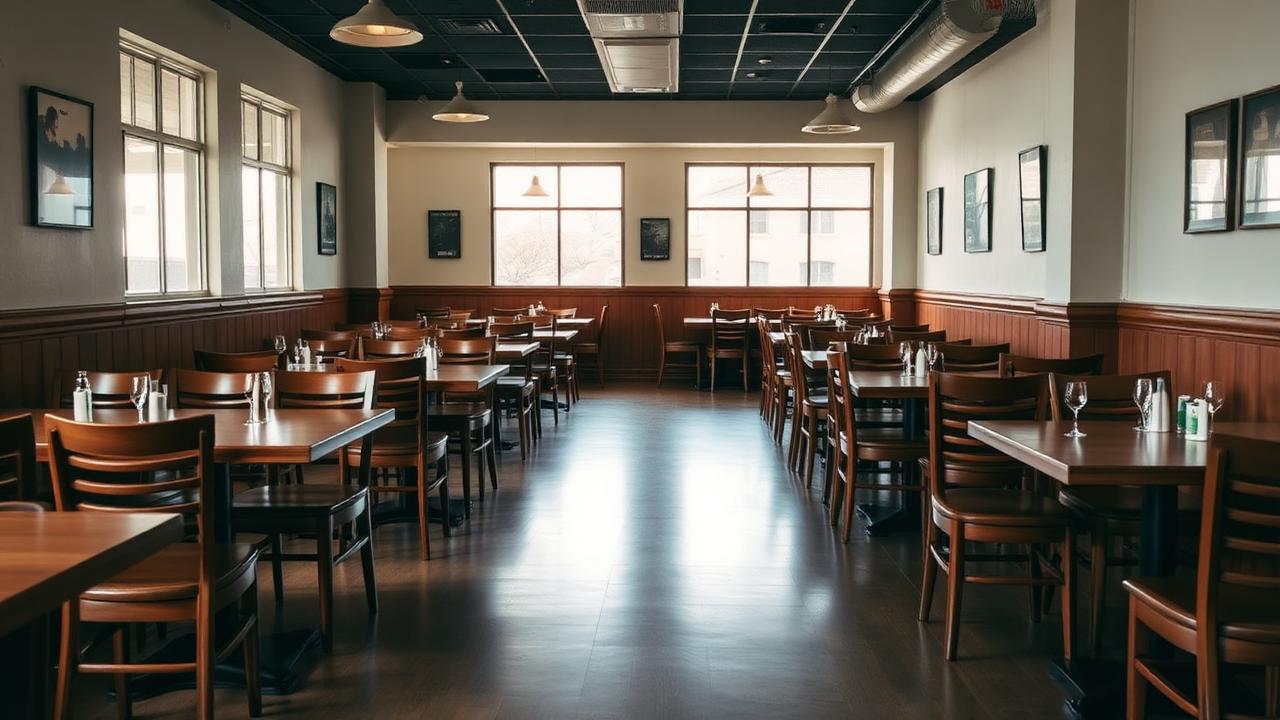
This is a cleaning-quality inspection checklist for restaurants, written for cleaning contractors, duty managers and multi-site operators who need to judge the standard actually delivered against the agreed cleaning specification.
Interactive checklist
Customer entrance
Inspect from the pavement inwards, in daylight, as a guest arrives.
Entrance glazing is free from obvious fingerprints, smears and splash marks over its full height.
dailyDoor frames, handles and push plates are free from greasy marks and visible build-up.
dailyEntrance flooring is clean and evenly finished, with no tracked-in grease, footprints or sticky patches.
dailyEntrance matting lies flat, is free from grit and shows no debris trapped along its edges.
dailyThe immediate frontage is free from litter, cigarette ends and food debris where included within scope.
Where included within scopedailyNothing in the first three metres of the guest's view is obviously unclean, marked or out of place.
daily
Dining area
Sit down at a table. Faults are visible from a seated eye line that are invisible standing up.
Dining floor is clean throughout, including beneath and between tables, with no crumbs, wrappers or dropped food.
dailyHard flooring is free from tacky residue underfoot, particularly around bar and service routes.
dailyTable tops, edges and undersides within scope are free from grease film, crumbs and dried spills.
Where included within scopedailyChair seats, backs, legs and banquette bases are free from crumbs, marks and visible soiling.
Where included within scopedailyAccessible high-level surfaces — ledges, sills, picture rails, light fittings — are free from dust and grease-bound dust.
weeklyInternal glazing, partitions and window sills in the dining area are free from smears and fly debris.
weeklyHigh-touch points in the dining area — door handles, condiment stations, high chairs where included — are visibly clean.
Where included within scopedailyCustomer waste points are emptied, liners intact, and no waste is left standing in the dining space.
daily
Service and counter area
Customer-facing counters only. Equipment cleaning is usually operator-owned — mark as not applicable where excluded.
Customer-facing counter surfaces are free from spills, crumbs, cup rings and sticky residue.
Where included within scopedailyCounter fronts, kick plates and visible panels are free from splash marks and scuffing residue.
Where included within scopedailyAccessible floor in front of and behind the counter is free from spillage, debris and slip risk.
dailyDisplay glazing and screens facing the customer are free from fingerprints and smears.
Where included within scopedailyPayment terminals, order screens and customer-facing touchpoints are visibly clean where within scope.
Where included within scopedailyWaste bins in the service area are emptied, clean externally and not overfilled at inspection.
daily
Customer washrooms
The single most common source of customer complaints. Inspect every cubicle, not a sample.
WC pans are clean inside and out, including under the rim, the hinges and the pedestal base.
dailySeats, lids and flush handles or plates are clean, dry and free from marks.
dailyUrinals are free from scale, staining and residue, and the surrounding wall and floor are clean.
dailyBasins are free from soap residue, toothpaste-type deposits and water marks, with clean overflow surrounds.
dailyTaps and pipework are polished, free from limescale bloom and water spotting.
dailyMirrors are streak-free over their full height, including corners and lower edges.
dailyWashroom floors are clean and dry, including corners, behind doors and the pipe boxing at floor level.
dailySoap, towel, tissue and hand-dryer housings are clean externally and free from drips and residue.
dailyConsumables are replenished and no dispenser is empty at the time of inspection, where supply is within scope.
Where included within scopedailyWaste and sanitary bins are emptied, clean externally, lidded and not overflowing.
dailyNo persistent odour is present that is not resolved by ventilation, and any drainage odour is reported rather than masked.
Report suspected drainage or extract faults as a maintenance issue, not a cleaning failure.
dailyHigh-touch surfaces — door handles, locks, baby-change units where present — are visibly clean.
dailyOverall washroom presentation would pass without hesitation if a guest walked in immediately after the inspection.
daily
Staff and back-of-house common areas
Only areas within the cleaning specification. Exclude anything owned by the operator's own team.
Staff room floors, tables and seating within scope are free from food debris, spills and litter.
Where included within scopedailyBack-of-house corridors and stairs are clear, clean and free from grease tracking and trip hazards.
dailyStaff washrooms and changing areas meet the same standard as customer washrooms where included.
Where included within scopedailyShared hard flooring is free from build-up at edges, in doorways and beneath shelving.
weeklyAccessible back-of-house surfaces, sills and lockers within scope are free from visible dust and grime.
Where included within scopeweeklyInternal waste points are emptied, liners replaced and surrounding floors clear.
daily
Kitchen and food preparation areas
Contracted cleaning quality only. This is not a food-safety, HACCP or health-code inspection, and it does not replace the operator's own procedures, statutory requirements, manufacturer instructions or specialist deep-clean and extract-cleaning programmes.
Kitchen floors within scope are free from food debris, standing water and grease film, including edges and under-unit voids that are safely accessible.
Do not move fixed or heavy equipment to inspect; record inaccessible areas instead.
Where included within scopedailyFloor gullies and channel covers within scope are free from visible debris, with any blockage reported rather than cleared informally.
Where included within scopedailyAccessible wall cladding and splashbacks within scope are free from splash marks and grease runs.
Where included within scopeweeklyContracted surfaces handed over for cleaning are clear of debris and visibly clean at handover.
Only inspect surfaces the operator has released to the cleaning team.
Where included within scopedailySinks, hand-wash basins and surrounds within scope are free from residue, with clean taps and no standing debris.
Where included within scopedailyKitchen waste points are emptied, liners replaced, bin exteriors clean and no waste left in the preparation area.
Where included within scopedailyWork excluded from the cleaning contract — equipment interiors, extract canopies, ducting and specialist deep cleans — is recorded as excluded rather than assessed here.
Confirm who owns each exclusion and that a separate programme exists; report gaps to the client.
periodic
Waste and service areas
The designated waste area is tidy, with containers closed and nothing stored outside them.
Where included within scopedailyFloors and ground around the waste area are free from spillage, food debris and grease residue.
Where included within scopedailyWaste container exteriors and lids are free from heavy soiling where external cleaning is within scope.
Where included within scopeweeklyWaste is segregated as the site requires, with no cross-contamination visible at the point of inspection.
dailyThe cleaning store is tidy, chemicals are labelled and correctly stored, and equipment is clean and serviceable.
weeklyPest sightings, drainage problems, damaged containers and missed collections are recorded and escalated rather than cleaned around.
dailyIssues raised at the previous inspection have been resolved and have not recurred.
weekly
Run this as a digital inspection
Turn this checklist into recurring site inspections, corrective actions, photographic evidence, supervisor verification and professional client reports. Your edits come with you.
It is not a food-safety, HACCP or health-code audit. Kitchen items here cover only the visible cleaning quality of contracted surfaces; food-safety procedures, statutory requirements, equipment manufacturer instructions and specialist deep-clean work remain the operator's responsibility. Every item describes an observable outcome so it can be recorded as a pass, a fail or not applicable.
What this checklist covers
- Customer entrance
- Glazing, doors and handles, flooring, matting, frontage and first impression.
- Dining area
- Floors, tables and seating, high-level dust, glazing, touchpoints and waste.
- Service and counter area
- Counter surfaces and fronts, floors, display glazing, terminals and bins.
- Customer washrooms
- Pans and urinals, basins and taps, mirrors, floors, dispensers, waste and odour.
- Staff and back of house
- Staff room, corridors, staff washrooms, shared floors and waste points.
- Kitchen and food prep
- Contracted floors, drains, splashbacks, released surfaces, sinks, waste and exclusions.
- Waste and service areas
- Waste area, surrounding ground, container exteriors, segregation and escalation.
Suggested frequencies
These are starting points, not a universal standard. The right frequency depends on the scope of work, footfall, site usage, client requirements and facility risk.
- Daily: Everything the guest sees or touches: entrance, dining floor, counter, washrooms and waste.
- Weekly: High-level dust, internal glazing, splashbacks, back-of-house floors and container exteriors.
- Periodic: Scheduled deep cleans and specialist work — usually a separate programme with its own records.
How to use this checklist
- Confirm the cleaning specification first, and mark anything the operator's own team owns as not applicable.
- Inspect after service and again before opening; a restaurant that passes at 6am can fail badly by 9pm.
- Sit at a table for part of the inspection — grease film, chair legs and banquette bases only show from a seated eye line.
- Treat kitchen items as contracted cleaning quality only, and never substitute this for the operator's food-safety procedures or a specialist deep-clean record.
- Do not move heavy or fixed equipment to reach an inspection point; record it as inaccessible and report it.
- Photograph failures with enough context to identify the table, cubicle or area, then raise a corrective action with an owner and a deadline.
Cleaning checklist vs quality inspection
A task checklist asks: was the task done? A quality inspection asks: does the result meet the agreed standard? The difference matters, because a client never sees your task list — they see the edge of a corridor, a washroom mirror and a meeting room table. Writing each item as an observable outcome is what makes a pass or fail defensible in a contract review.
Common quality failures
- Dining floors cleaned in the open walkways while crumbs remain under and between tables.
- Chair legs, banquette bases and table undersides carrying a grease film that only shows when seated.
- Entrance glazing cleaned to arm height, leaving a visible line in daylight.
- Washroom passing on the first cubicle and failing on the last one nobody checked.
- Empty soap or towel dispensers during service despite the washroom itself being clean.
- Drainage odour repeatedly masked with fragrance instead of being reported as a maintenance fault.
- Kitchen exclusions assumed to be covered by 'someone else' with no deep-clean programme in place.
- Waste area tidy inside but spillage and food debris left on the surrounding ground.
Customise this for your contract
Commercial cleaning scopes vary between contracts and facilities. Adapt this template to reflect the agreed scope of work, required frequencies, site risks and client-specific standards.
Items marked where included within scope are the ones most likely to differ between contracts — remove or reword them in the editor above.
Inspect → Correct → Verify
CleaningQA takes this checklist further: run it on a phone at the site, record failed items with photographs, raise corrective actions with an owner and a deadline, collect completion evidence, verify the fix as a supervisor, and send the client a professional quality report.
More on the product: CleaningQA cleaning inspection software
Related templates
Frequently asked questions
- Is this a food-safety or HACCP checklist?
- No. It inspects the quality of contracted cleaning only. Food safety, HACCP, statutory hygiene requirements and specialist kitchen sanitation remain the operator's responsibility and need their own procedures and records.
- Should kitchen areas be included in a cleaning inspection?
- Only the parts the cleaning contract covers, and only surfaces the kitchen team has released. Equipment interiors, canopies and ductwork are normally separate specialist work — record them as excluded so the gap is visible.
- When is the best time to inspect a restaurant?
- Inspect before opening to judge the delivered clean, and during or after service to see how the standard holds up under real trading conditions.
- Is the checklist free to edit and print?
- Yes. Edit the wording, add or remove items and print it without an account. Your changes are saved in your own browser.